
## The Problem With Most Nootropic Blends
Walk into the cognitive-supplement aisle — or click through any nootropic sales page — and you'll see a familiar pattern: a long list of exotic-sounding herbs, a handful of vague claims ("supports memory," "enhances clarity"), and almost never a disclosed dose for any individual ingredient. The label tells you what's in the capsule. It rarely tells you how much.
That matters because herbal nootropics are dose-dependent, the same as any other compound. Bacopa monnieri at a clinically studied dose looks completely different, biologically, than a token sprinkle of it in a 12-ingredient blend designed to look impressive on a label.
This post sets the product marketing aside and looks at five ingredients that show up constantly in cognitive-health formulas — what they actually do, what the human evidence shows, and where the evidence runs out.
## Lion's Mane (Hericium erinaceus)
Lion's Mane is a culinary and medicinal mushroom containing compounds called hericenones and erinacines, which have been shown in lab studies to stimulate nerve growth factor (NGF) — a protein involved in the growth, maintenance, and survival of neurons.
A small randomized controlled trial in older Japanese adults with mild cognitive impairment found that those taking Lion's Mane for 16 weeks scored better on cognitive function tests than the placebo group, with the effect fading after supplementation stopped — consistent with an active, dose-dependent mechanism rather than a placebo effect.
**The honest caveat:** most Lion's Mane human research is small-sample and short-duration. The mechanism (NGF stimulation) is well-documented in lab and animal studies; the human cognitive-outcome data is promising but not yet large-scale.
## Bacopa Monnieri
Bacopa is an Ayurvedic herb whose active compounds — bacosides — are among the better-studied nootropic compounds in the herbal category. Multiple human randomized trials have found improvements in memory consolidation and recall with consistent Bacopa supplementation, typically becoming measurable after 8–12 weeks rather than immediately.
This delayed onset is a real, replicated finding — and it's also why Bacopa is a poor fit for "take it and feel sharper today" marketing. Its mechanism (supporting synaptic communication and reducing oxidative stress in neural tissue) operates on a slower timeline than stimulant-based cognitive aids.
**Typical studied dose:** 300–450mg/day of a standardized extract (usually standardized to 50% bacosides), taken with food since Bacopa is fat-soluble.
## Gotu Kola (Centella asiatica)
Gotu Kola has a long history in traditional medicine for cognition and circulation. The human evidence here is thinner than Bacopa's — some studies show improvements in mood and reduced anxiety, with more limited and mixed data specifically on memory and cognitive performance. It's frequently included in blends more for its traditional reputation than for a deep, replicated human evidence base.
## Schisandra (Schisandra chinensis)
Schisandra is classified as an adaptogen — a category of botanicals studied for their ability to help the body manage stress. Its lignan compounds (including schisandrin) have antioxidant properties in lab studies. Direct human cognitive trials are limited; most of the supporting evidence is mechanistic (cellular/animal) rather than large human RCTs. It's reasonable as a stress-resilience ingredient; it's a stretch to market it primarily as a memory enhancer.
## Shilajit
Shilajit is a mineral-rich substance exuded from rock in high-altitude regions, traditionally used in Ayurvedic medicine. It contains fulvic acid and a range of trace minerals. What makes it relevant to a mitochondria-focused readership specifically: emerging research has examined Shilajit's effects on cellular energy metabolism, with some studies suggesting it may support mitochondrial ATP production and reduce markers of fatigue. This research base is newer and smaller than Bacopa's — promising mechanistically, but with less human outcome data than the more established nootropic herbs.
## What This Means If You're Considering a Blend
None of this is an argument that these ingredients don't work — several of them (particularly Bacopa and, with caveats, Lion's Mane) have genuine, replicated human evidence behind them. The issue is specifically about **blends that combine several of these ingredients without disclosing individual doses.**
If a product lists Lion's Mane, Gotu Kola, Shilajit, Bacopa, and Schisandra together but doesn't tell you how much of each is in the capsule, you have no way to know whether you're getting a clinically meaningful dose of the well-evidenced ingredients (Bacopa, Lion's Mane) or a token amount designed mainly to pad the label.
[CogniSurge](/products/7) is one example of a blend containing several of these — specifically Lion's Mane, Bacopa monnieri, Gotu Kola, Schisandra, and Shilajit. In the interest of the same transparency this post is arguing for: the brand does not publish per-ingredient doses, so we can't tell you whether any individual compound is present at a research-supported level. That's worth knowing before you buy any blended nootropic, not just this one.
## The Bottom Line
If cognitive support is the goal, the ingredients with the strongest individual human evidence are Bacopa monnieri (8–12 week onset, 300–450mg/day standardized extract) and, with more modest but real support, Lion's Mane. Gotu Kola, Schisandra, and Shilajit have legitimate traditional use and promising mechanistic research, but thinner direct human cognitive trial data.
The single most useful thing you can do before buying any nootropic blend: look for a label that discloses milligrams per ingredient, not just a list of names. If it's not there, you're buying based on the ingredient list looking impressive — not on knowing what you're actually getting.
Written by
Mitoproof
Translating the science of cellular aging and biohacking into practical, evidence-grounded guidance for everyday protocols.
Keep reading
All articles →
featured
The Vaginal Microbiome: The Second Microbiome Most Biohackers Have Never Tested
The vaginal microbiome is just as biologically active as your gut and drives UTI frequency, yeast infections, fertility, and systemic...
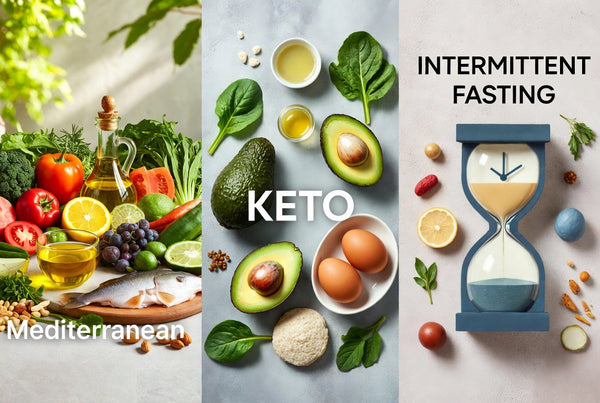
Mediterranean Diet vs. Keto vs. Intermittent Fasting: What the Evidence Actually Supports
Three popular approaches, compared directly against the evidence for the outcomes that actually matter -- not just which one is...

The Mediterranean Diet and Mitochondrial Health: What the Research Actually Shows
The Mediterranean diet has one of the strongest evidence bases in nutrition science, including large randomized trials with real cardiovascular...