## What Is PQQ?
Pyrroloquinoline quinone (PQQ) is a small quinone molecule found in trace amounts in plant foods — and in human breast milk. For decades, researchers assumed it was simply a cofactor for certain bacterial enzymes. Then, in 2003, a landmark paper in *Nature* changed everything.
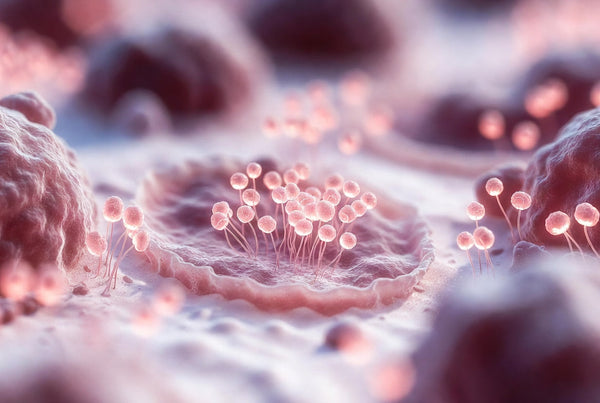
Scientists discovered that PQQ activates a master genetic switch called **PGC-1α** (peroxisome proliferator-activated receptor gamma coactivator 1-alpha) — the same pathway stimulated by endurance exercise and caloric restriction. The result: **mitochondrial biogenesis**. Your cells don't just repair old mitochondria — they *build new ones from scratch*.
No other dietary compound has been shown to do this.
## Why Mitochondrial Biogenesis Matters
You lose approximately 10% of your mitochondrial density per decade after age 30. By 50, most people are running on 60–70% of the mitochondrial capacity they had at 25. This decline correlates directly with:
- Chronic fatigue that doesn't resolve with rest
- Cognitive fog and declining memory consolidation
- Reduced VO2 max and physical capacity
- Slower metabolic rate and easier fat storage
- Accelerated cellular aging across all tissue types
Mitochondrial biogenesis — growing *new* mitochondria — is the only way to reverse this trend. Exercise triggers it. Cold exposure triggers it. Caloric restriction triggers it. And PQQ appears to trigger it at the molecular level even without those stressors.
## The Science Behind PQQ
### PGC-1α Activation
PQQ's primary mechanism is upregulating PGC-1α, which functions as a transcriptional coactivator that directly controls mitochondrial biogenesis. PGC-1α activation leads to:
- Increased expression of nuclear respiratory factors (NRF-1 and NRF-2)
- Upregulation of mitochondrial transcription factor A (TFAM)
- Enhanced mitochondrial DNA replication
- Synthesis of new electron transport chain complexes
A 2010 study published in the *Journal of Nutritional Biochemistry* showed that dietary PQQ deprivation in rodents led to significant reductions in mitochondrial number and function — and that restoration of PQQ reversed these deficits.
### CREB Pathway and Neuroprotection
PQQ also activates CREB (cAMP response element-binding protein), a transcription factor involved in synaptic plasticity, memory formation, and neuronal survival. This explains why PQQ research consistently shows benefits in:
- Cognitive performance and working memory
- Nerve growth factor (NGF) production
- Protection against beta-amyloid toxicity relevant to Alzheimer's disease
- Mitochondrial protection in neurons after ischemic injury
### Antioxidant Capacity: 5,000x More Efficient Than Vitamin C
PQQ's unique redox cycling capability allows it to perform thousands of electron transfers before becoming inactive — compared to vitamin C's single-use antioxidant action. This makes PQQ an extraordinarily efficient neutralizer of reactive oxygen species (ROS) at the mitochondrial membrane, protecting the very organelles it helps build.
## Human Clinical Evidence
A 2012 randomized controlled trial published in *Food & Function* showed that 20mg of PQQ daily for 8 weeks:
- Significantly improved short-term memory and attention
- Reduced plasma CRP (inflammation marker) by 31%
- Increased urinary 8-isoprostane excretion (indicating enhanced ROS neutralization)
- Improved sleep quality in elderly subjects
A follow-up study combining PQQ with CoQ10 showed synergistic effects on cognitive performance superior to either compound alone — CoQ10's role in energy production paired with PQQ's role in building new capacity.
## PQQ + CoQ10: The Mitochondrial Stack
These two compounds work through distinct but complementary mechanisms:
| Compound | Primary Action | Mechanism |
|---|---|---|
| PQQ | Builds new mitochondria | PGC-1α activation, mitochondrial biogenesis |
| CoQ10 | Powers existing mitochondria | Electron carrier in ATP synthesis chain |
CoQ10 without PQQ is like upgrading the fuel efficiency of an existing engine fleet. PQQ without CoQ10 builds new engines but doesn't fully optimize their operation. Together, they address both the *quantity* and the *quality* of your mitochondrial network.
After age 35, when endogenous CoQ10 production begins declining, this combination becomes especially relevant.
## Dosing Protocol
**Standard dose:** 10–20mg PQQ daily
**Optimal dose:** 20mg with 200–400mg CoQ10 (as ubiquinol)
**Timing:** Morning with food (fat-soluble; improved absorption with dietary fat)
**Onset:** Cognitive effects reported within 2–3 weeks; cellular changes accumulate over 6–12 weeks
## Food Sources vs. Supplementation
PQQ is found in:
- Natto (fermented soybeans): ~61 nmol/g
- Parsley: ~17 nmol/g
- Green tea: ~16 nmol/g
- Kiwi: ~27 nmol/g
The problem: even a 100g serving of the richest sources provides only 2–6 mcg of PQQ — far below the 10–20mg doses used in clinical research. Supplementation isn't optional if you want meaningful biological effects.
## What to Look For in a PQQ Supplement
- **Form:** PQQ disodium salt (BioPQQ® is the most researched branded form)
- **Third-party tested:** Look for NSF, Informed Sport, or USP certification
- **Dose:** Minimum 10mg; 20mg for therapeutic intent
- **Combination products:** PQQ + CoQ10 formulas offer the best mitochondrial ROI
## Conclusion
PQQ is genuinely unique. Every other mitochondrial compound — CoQ10, NAD+ precursors, alpha-lipoic acid — supports existing mitochondria. PQQ is the only dietary compound with human evidence for *building new ones*.
For anyone over 35 dealing with declining energy, cognitive function, or physical capacity, PQQ represents a mechanistically distinct intervention that addresses the root cause: loss of mitochondrial density.
The question isn't whether you can afford to take PQQ. It's whether you can afford not to.